We have assembled this comprehensive report on the confrontation between ICE officers and protesters in Chicago, Illinois, on October 4, 2025. We believe this is the fairest, most objective, and most lucid analysis available given publicly information available at the time of writing (approx. 1am EST, Oct. 5)
This information is presented primarily in an effort to preserve truth, as the current situation is saturated with immediate rewriting of history by coup leaders, and it is critical to uphold an accurate record in the contemporary context.
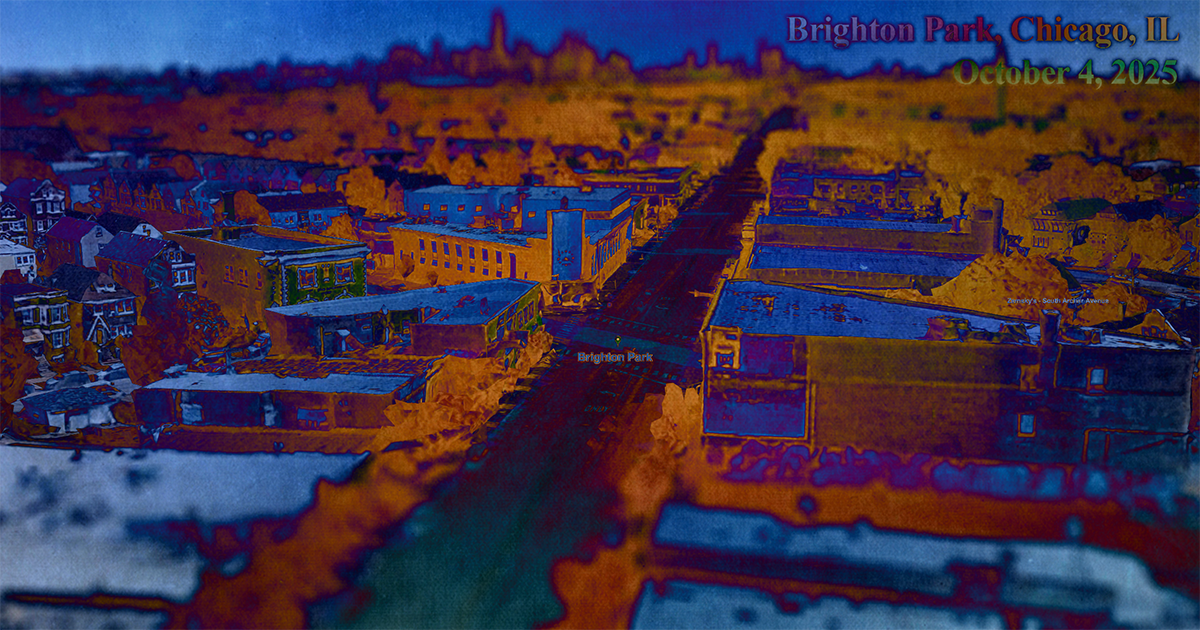
The shooting in Brighton Park, Chicago, emerged from the extraordinary tensions stoked by ongoing federal immigration enforcement operations under “Operation Midway Blitz.” This incident transpired on the morning of October 4, 2025, and rapidly drew local, national, and international attention due to its graphic nature, the political climate, and the conflicting narratives from law enforcement, activists, and media.
At approximately 10:30 a.m., U.S. Border Patrol agents operating as part of ICE reported that their patrol was “rammed by 10 cars” and “boxed in” near the intersection of South Kedzie Avenue and 39th Street in Brighton Park. According to DHS Assistant Secretary for Public Affairs Tricia McLaughlin, the agents were unable to maneuver out of the impasse and exited their vehicles. During this standoff, they reported that a driver (later identified as a woman) who had allegedly rammed a law enforcement vehicle was “armed with a semi-automatic weapon.” At this point, Border Patrol agents “deployed their weapons and fired defensive shots”.
Confusion ensued regarding the sequence of events. Initial statements from federal authorities insisted the aggression began with the protesters, emphasizing vehicular ramming and the armed status of the woman driver. In contrast, local activist networks and rapid response teams offered a different picture: they claimed that ICE vehicles had first collided with a civilian car, and then fired multiple times without provocation. The woman, a U.S. citizen and prominent activist, was shot in the legs, arm, and chest. Despite her injuries, reports indicate she attempted to drive herself to the hospital but was instead found by first responders near 39th Street and Pershing Road, then taken to Mount Sinai Hospital in fair condition.
Shortly after the incident, an angry crowd began to gather at the scene. Protesters and local residents confronted the federal agents; the situation escalated with federal agents deploying tear gas, pepper balls, and, reportedly, rubber bullets. The Chicago Police Department, although initially responding, quickly withdrew from active involvement. Dispatch records and explicit internal orders show that a top Chicago PD executive directed all city officers to avoid the scene entirely, authorizing only traffic and crowd control at a distance.
Over the ensuing hours, protests rippled through the immediate neighborhood, eventually spreading to other sites of ICE activity throughout the city. By early afternoon, over 100 protesters were counted at the scene, some of whom were subjected to aggressive crowd-dispersal tactics by federal agents equipped with riot gear and less-lethal munitions.
Federal officials confirmed by midday that two individuals had been taken into custody in connection with the alleged vehicular ramming. The investigation was handed over to federal authorities, and local law enforcement agencies stressed that they were in a supporting, not investigative, role. By late afternoon, the DHS and DOJ characterized the incident as an attack on law enforcement, while state and local officials, including Illinois Governor JB Pritzker, decried the escalation and the threat of militarized federal intervention. Federal authorities subsequently announced plans to deploy an additional 300 National Guard troops to Illinois—a move strongly contested by state leadership.