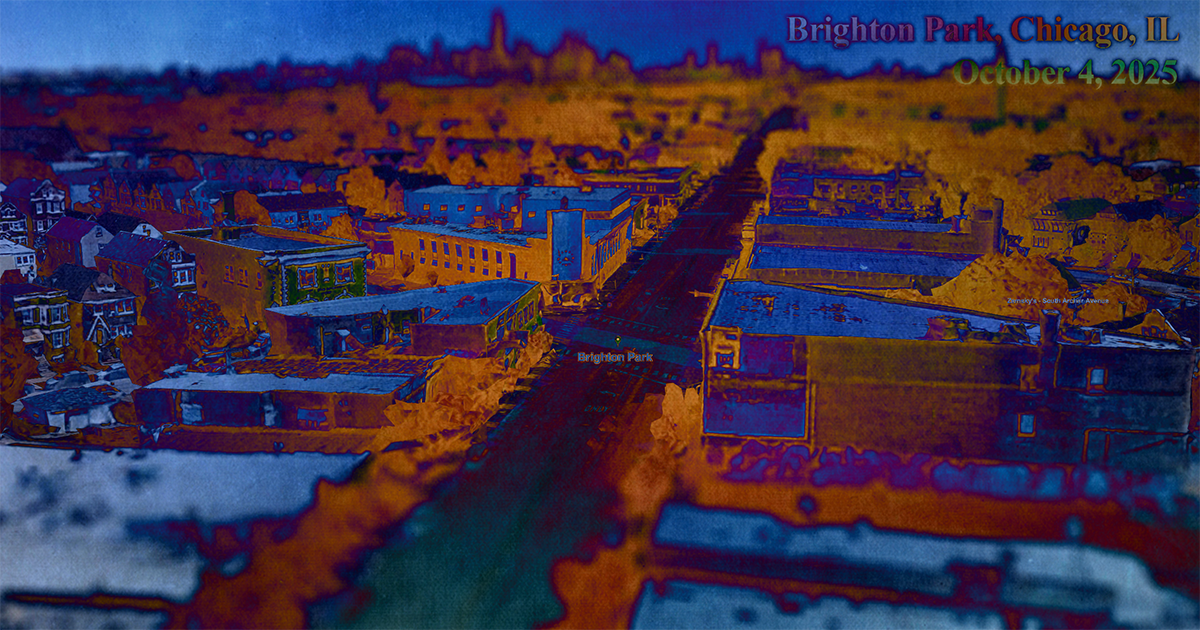
We have assembled this comprehensive report on the confrontation between ICE officers and protesters in Chicago, Illinois, on October 4, 2025. We believe this is the fairest, most objective, and most lucid analysis available given publicly information available at the time of writing (approx. 1am EST, Oct. 5)
This information is presented primarily in an effort to preserve truth, as the current situation is saturated with immediate rewriting of history by coup leaders, and it is critical to uphold an accurate record in the contemporary context.
The Chicago Police Department’s response to the shooting and subsequent protests was notable for the clear lines drawn between city and federal jurisdiction. Initial CPD dispatch records confirm officers responded to 911 calls from the scene, but their presence quickly shifted from direct involvement to passive crowd and traffic control at the outer perimeter. According to leaked communications later published in CWB Chicago, a Chief of Patrol issued a categorical order that “NO UNITS WILL RESPOND” to the incident, effectively cordoning off the site for federal control only. This avoidance marked a continuation of recent CPD policy, whereby supervisors directed officers to steer clear of all hot zones involving ICE and Border Patrol activity, reportedly to avoid legal and political liability or further escalation.
City officials and local political figures, including Mayor Brandon Johnson, reaffirmed Chicago’s noncooperation stance, citing both the city’s “Welcoming City” ordinance and grave doubts about federal adherence to due process, transparency, and oversight. Publicly, the CPD has reiterated that it was “not involved in the incident or its investigation,” underscoring the estrangement between local and federal agencies on public safety, immigration, and protest management.
At the state level, Illinois Governor JB Pritzker responded forcefully to both the shooting and the threatened National Guard deployment. In exchanges with the press and official statements, Pritzker condemned the federal strategy as “a manufactured performance,” lacking in any genuine focus on public safety and instead aimed at political posturing and intimidation. He openly rejected federal demands to call up the National Guard, framing the ultimatum as “outrageous and un-American,” and asserting, “I will not call up our National Guard to further Trump’s acts of aggression against our people.” Nonetheless, by late afternoon on October 4, the White House made clear its intention to federalize 300 Illinois National Guard troops for deployment to the state in support of DHS operations—a move fiercely contested by state leadership and bound up in ongoing litigation and public protest.
Local and state leaders’ public disavowals and refusals to coordinate have become a central feature of the unfolding standoff, with city, county, and state officials collectively denouncing what they view as an illegitimate and harmful militarization of immigration enforcement.